

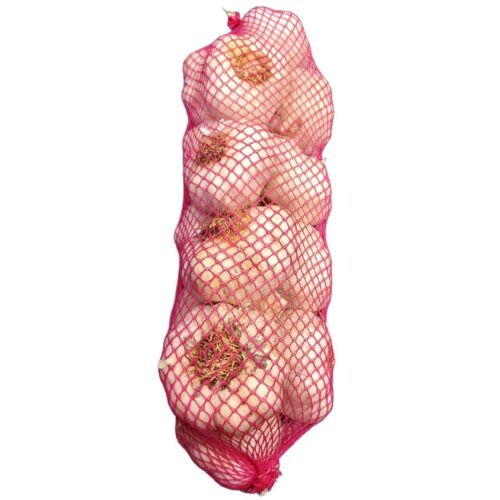
V010 – 15/20 GARLIC IN MESH BAG
Description: Garlic belongs to the Liliaceae family, which includes about 3,500 species of herbaceous plants and trees. The genus Allium, which includes vegetables as well-known as garlic, onions and leeks, is the most important in this family.
Garlic is a plant formed by an underground bulb from which a stem with leaves emerges. The bulb is the so-called head which, in turn, is composed of the garlic cloves. Its cultivation does not require strict environmental conditions, so it is quite simple. Garlic cloves are sown between the months of November and December and harvesting begins when the plant dries, which usually happens between the months of May and July. Garlic planted in the spring, however, only requires four and a half months of growth before being harvested. On the other hand, when the bulb is not yet formed and just before the plant flowers, tender garlic can be harvested, which is immature garlic, widely used in our cuisine.
Nutritional properties: Compared to other vegetables, garlic has a surprisingly high energy content thanks to its richness in proteins and carbohydrates. However, it should be borne in mind that garlic is consumed in small quantities and, therefore, cannot be considered a source of either proteins or carbohydrates. The same applies to minerals such as iodine, potassium and phosphorus, of which garlic is also rich.
Since ancient times, vegetables belonging to the genus Allium have been shown to have beneficial effects. These effects are mainly due to their high content in phytonutrients called organosulfur compounds, among which alliin stands out, which is the main precursor to the aroma of garlic and which appears when it is cut or crushed. Among the biological activities of these organosulfur compounds, antioxidant, anti-inflammatory, anticancer, antimicrobial, immunomodulatory, lipid metabolism-promoting, and cardio- and neuroprotective activities have been described.
Consumption: The best quality garlic is that which has firm heads, without sprouts and with a dry skin. It is advisable to choose small, compact and heavy heads. White garlic can be kept intact for about 6 months, provided that the whole bulb is stored. If the cloves are separated individually, the shelf life of the garlic is reduced in a matter of weeks. It is advisable to keep them in a dry, cool and well-ventilated place, to prevent them from blooming or starting to germinate. If you choose to separate the cloves, they can be stored in a glass jar covered with virgin olive oil which, apart from preserving them well, will be flavoured and can be used to season some dishes. Although it may seem strange, garlic can also be kept frozen for approximately 2 months, if the outer skin is previously separated, although once thawed they lose their original texture.Garlic is a basic ingredient in the cuisine of many countries, it is used both whole and chopped, grated or powdered and is part of numerous sauces, preserves and other preparations. A typical sauce of our gastronomy that is made with garlic is alioli, which, following the original recipe, is made only from garlic, olive oil and salt.

Reviews
There are no reviews yet.